Why I Listen at 1.75x Speed (And Why You Should Too)

Key Takeaways
- The Brain Gap: Humans speak at ~150 wpm but think at ~400 wpm. This gap causes distractions.
- The Sweet Spot: Comprehension remains high up to 275 wpm (approx 1.75x speed).
- Silence Removal: Using "Smart Speed" apps is more effective than raw speed increases.
- The Rule: Speed up information (Non-fiction), slow down experience (Fiction).
Table of Contents
Most people lie about how much they read. We buy books, stack them on the nightstand, and treat them as trophies of the person we wish we were.
I was that person. For years, my Kindle Paperwhite sat on my bedside table, gathering dust. I told myself I loved the "idea" of reading, but in reality, I was too exhausted after work to focus on text. In 2019, out of desperation, I switched to audiobooks. I thought it would solve everything.
It didn't.
I pressed play on a 12-hour biography. The narrator had a deep, soothing voice. He spoke... very... slowly. Ten minutes in, my mind had drifted to what I needed to cook for dinner. I had to rewind. Twice. I felt stupid.
The problem wasn't my attention span. The problem wasn't the book. The problem is the Default Speed Trap.
I've since listened to over 300 books. I'm not a genius, and I don't have more free time than you. I just stopped treating audiobooks like theater performances and started treating them like data streams. Here is the unvarnished truth about speed listening.
The "Slow Walker" Phenomenon: Why You Can't Focus
Forget the productivity hacks for a second. Let's talk about biology.
The average audiobook narrator speaks at roughly 150 words per minute (wpm). This is confirmed by data from the National Center for Voice and Speech. They are trained to articulate every syllable perfectly and breathe deeply. It's a performance.
But your brain? Cognitive research suggests the average adult thinks and processes language at roughly 400 wpm (and often much faster in bursts).
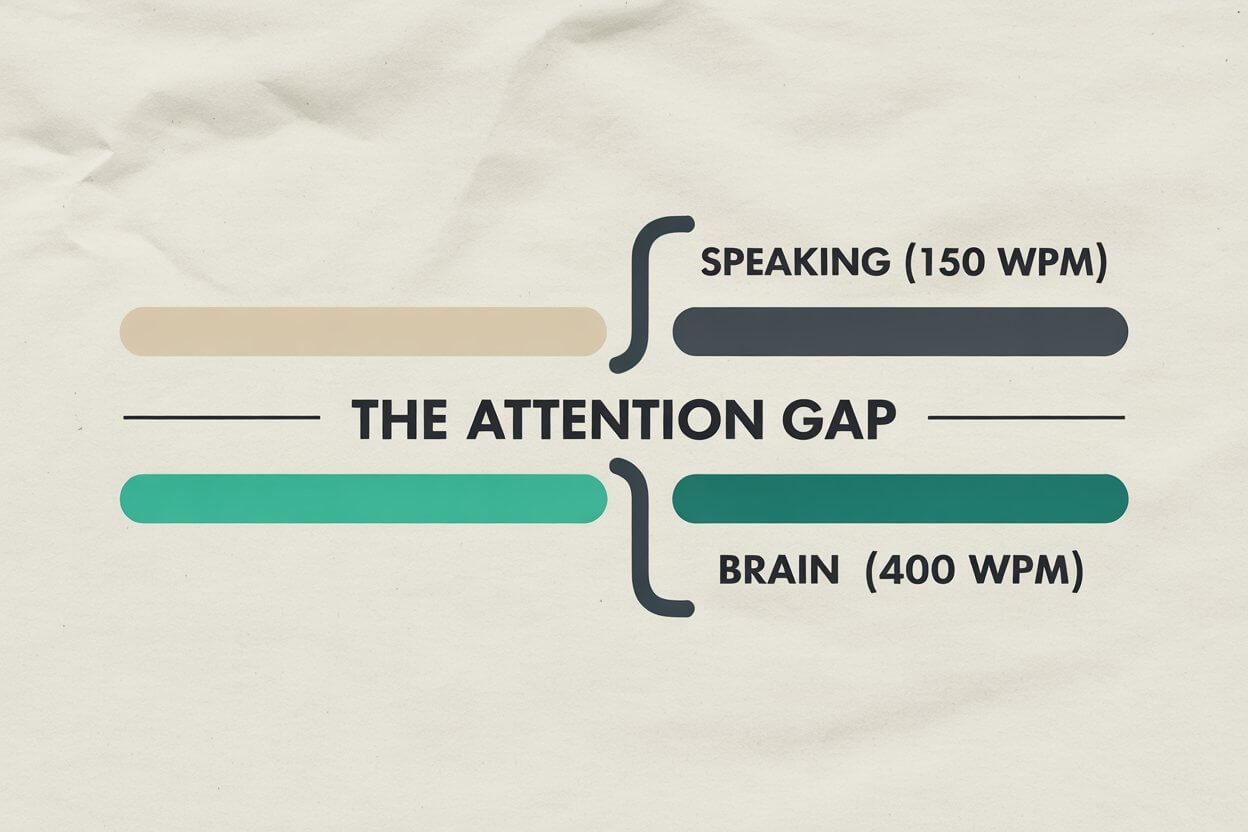
Do you see the math problem? When you force a 400-wpm brain to consume 150-wpm content, you create a massive vacuum. You are giving your mind permission to multitask. It's not that you can't focus at normal speed; it's that the signal is too weak to hold your attention. Your brain gets bored, so it starts solving other problems (like your dinner plans) in the background.
By increasing the speed, you aren't just "rushing." You are matching the input speed to your processor speed. This induces a Flow state. You literally cannot think about dinner, because if you drift off for three seconds at 1.75x, you miss two paragraphs. The fear of missing out keeps you locked in.
The Tech Stack: It's Not Just About "2x"
One of the reasons people fail at speed listening is that they use the wrong tools. They open the default player, hit "2x", hear a chipmunk, and quit.
To do this right, you need to understand the difference between Variable Speed and Silence Removal.
1. The "Chipmunk" Myth vs. Pitch Correction
In the early 2000s, speeding up audio simply compressed the file duration, which raised the pitch frequency. Everyone sounded like they had inhaled helium. Today, every major player (Audible, Spotify, Apple Books) uses Pitch Correction algorithms. They cut tiny slices of silence out of the audio wave to shorten the duration while maintaining the original vocal tone. A narrator at 1.5x doesn't sound higher; they just sound caffeinated.
2. The Secret Weapon: Silence Removal (Smart Speed)
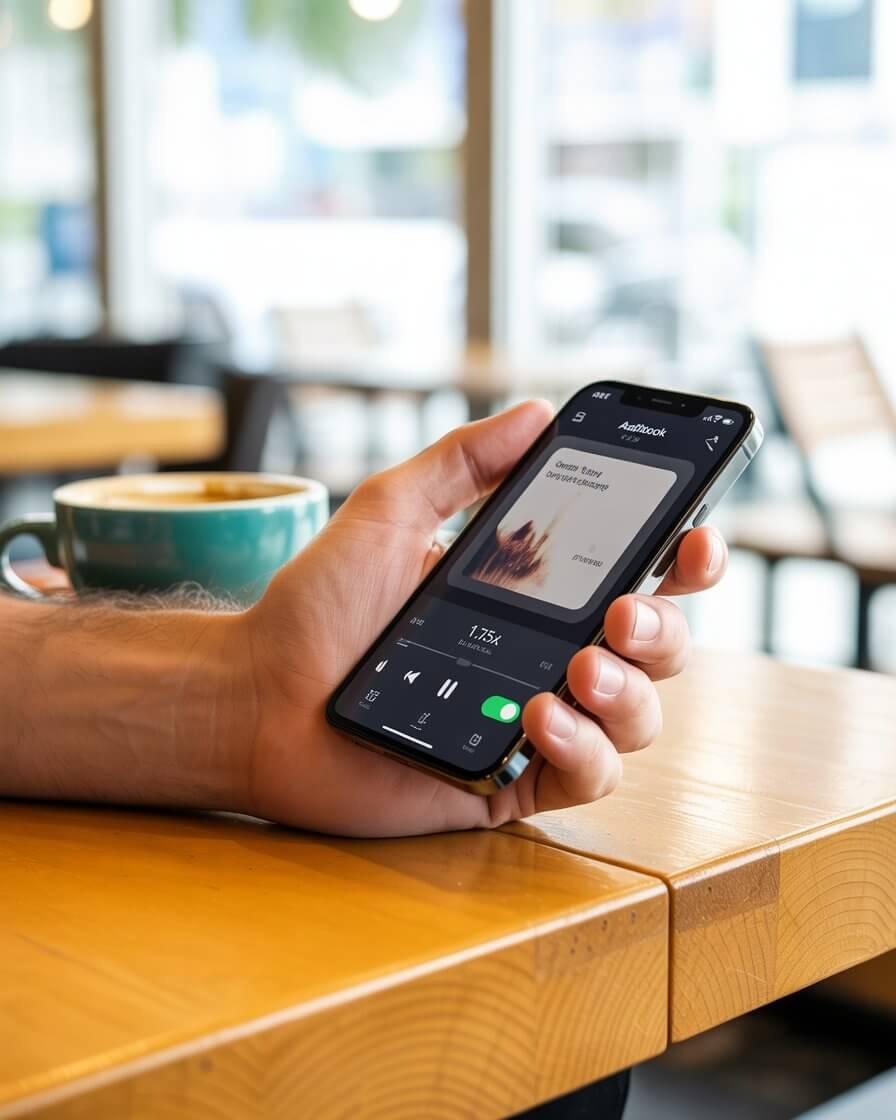
This is where the pros live. Narrators pause. A lot. They pause after sentences. They pause between chapters. If you simply speed up the track to 1.5x, you are speeding up the words AND the silence.
Advanced apps like Overcast (iOS), Podcast Addict (Android), or Pocket Casts have a feature called "Trim Silence" or "Smart Speed." These algorithms analyze the audio waveform in real-time. When they detect a drop in volume (a pause), they skip it entirely.
A Realistic Approach to Training (No "21-Day Plans")
You don't need a rigid "training regimen." You just need to get over the initial "Auditory Shock."
When you first switch from 1.0x to 1.5x, it will feel frantic. Give it exactly 15 minutes. That's how long it takes for auditory acclimatization to kick in. Your brain stops hearing "fast speech" and just hears "speech."
Research on time-compressed speech (notably by Foulke & Sticht) has shown that comprehension remains high up to about 275 wpm. That is roughly 1.8x speed. Beyond that, retention drops off a cliff — I dig into whether speeding up actually hurts comprehension separately.
My Suggested Progression:
- Start at 1.25x today. Don't even think about it. 1.0x is dead to you.
- Next week, toggle to 1.5x. Use it for a commute (see the 1.25x vs 1.5x breakdown).
- The "Gym" Standard: When I'm lifting weights, I listen at 1.75x. The physical activity heightens my alertness.
The Hard Line: When Speed Ruins the Book
I listen to business books, biographies, and "Big Idea" non-fiction at 1.75x or 2.0x. I devour them. But there is a hard line I never cross.
Fiction is off-limits.
If you are listening to Project Hail Mary by Andy Weir, narrated by Ray Porter, speeding it up is an insult to the art form. These narrators are actors. When Ray Porter pauses before a terrifying reveal, that silence is part of the text. It's written in invisible ink. If you are listening at 2x with "Trim Silence" on, that dramatic pause becomes a blip. You turn a cinematic experience into a summary.
My personal rule of thumb:
- Is the goal Information? (History, Bios, Marketing) → 1.5x to 2.5x
- Is the goal Experience? (Novels, Drama, Poetry) → 1.0x to 1.1x
The Math Doesn't Care About Your Feelings
We can debate the "feeling" of speed all day, but the math is brutal (the full speed-vs-time chart is here). Let's look at a concrete example: Atomic Habits by James Clear.
- Original Length: 5 hours and 35 minutes.
- At 1.0x: If you commute 30 minutes a day, it takes you 11 days to finish.
- At 1.5x: It takes 3 hours and 43 minutes. You finish it in 7 days.
- At 2.0x: It takes 2 hours and 47 minutes. You finish it in 5 days.
That might not seem like much on a single book. But zoom out to a year. If you listen for 200 hours a year (which is average for a commuter):
- At 1.0x, you consume 200 hours of content.
- At 1.5x, you consume 300 hours of content in the same timeframe.
That is the difference between reading 20 books a year and reading 30. Over a decade, that is a library of 100 extra books that you "downloaded" into your brain, simply because you tapped a button.
My own year in numbers
This isn't theory. Here is what 1.75x did for me this year:
- 112 books finished this year.
- 1.75x average listening speed.
- Roughly 1,000 hours of content consumed in about 570 hours of actual listening — ~430 hours saved over the year.
The tipping point for me was an 18-hour biography I'd bought twice and never finished at 1x. At 1.75x it became a two-week listen instead of a two-month guilt trip — and I never went back.
Frequently Asked Questions
Does listening at 2x affect retention?
Studies show retention is stable up to ~275 wpm (1.75x). However, retention drops if you multitask on cognitive tasks (writing emails) while listening.
What is the best app for speed listening?
Apps like Overcast (iOS) and Podcast Addict (Android) are superior because of their "Smart Speed" / "Trim Silence" features, which shorten pauses instead of just distorting the voice.
Can I train myself to listen faster?
Yes. The auditory cortex adapts quickly. Start at 1.25x for a week, then move to 1.5x. Most users find 1.5x becomes their "new normal" within 2 weeks.
Conclusion: Just Try the Dial
You don't have to commit to a life of chipmunk voices. You don't have to ruin your favorite novels. But you owe it to yourself to see what your brain is actually capable of.
Next time you open your app, push it to 1.25x. Then 1.3x. Find your breaking point.
Want to see exactly how much time you'll save on your current book? Don't try to do the fractional math in your head. I built a free tool at the top of this page. Put in your audiobook's total length, toggle the speed, and see exactly when you'll be done.
Ready to save time?
Use the Audiobook Speed CalculatorRelated Articles

Is Speed Listening 'Cheating'? The Truth About Retention
Does listening at 2.0x ruin comprehension? We look at the neuroscience of attention, the 'Drift Effect', and why 1.0x might actually be hurting your focus.
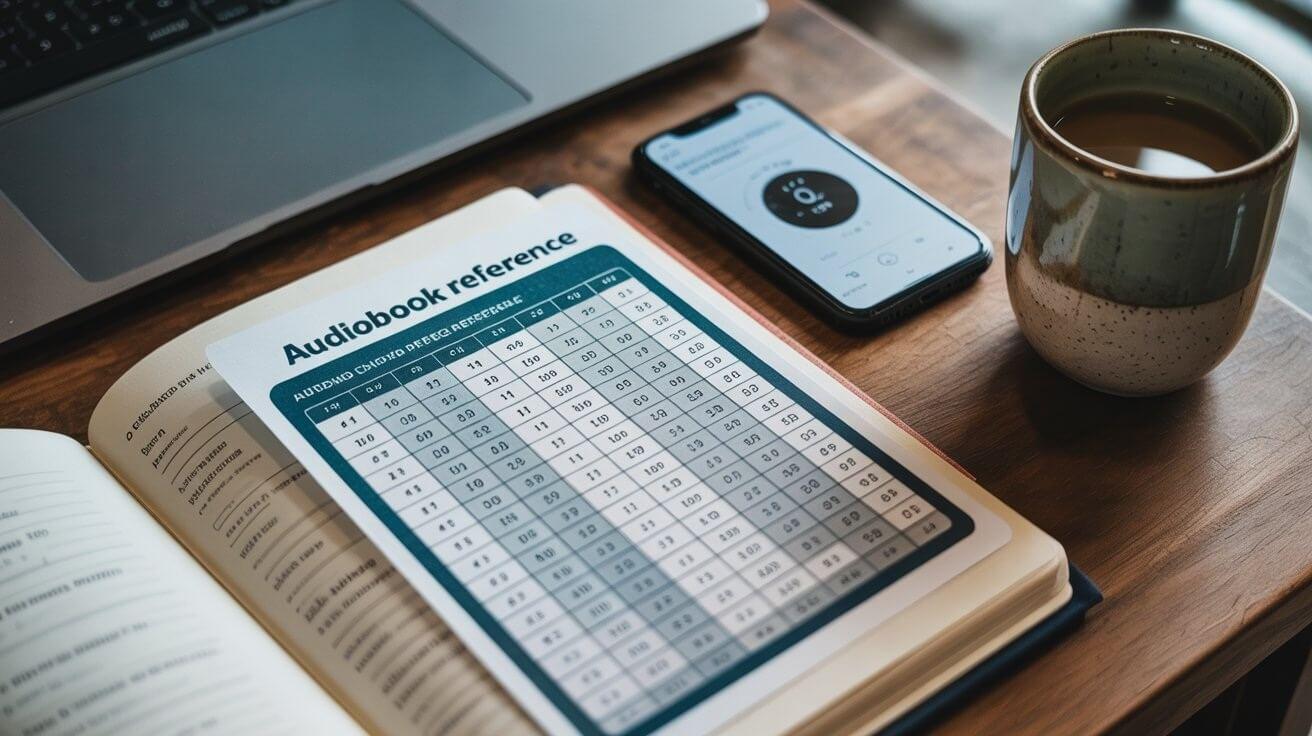
The Audiobook Speed Cheat Sheet: How Long Will It Take? (Charts)
Quick reference tables for 1.25x, 1.5x, and 2.0x speeds. See exactly how much time you save on 8h, 10h, and 12h audiobooks.
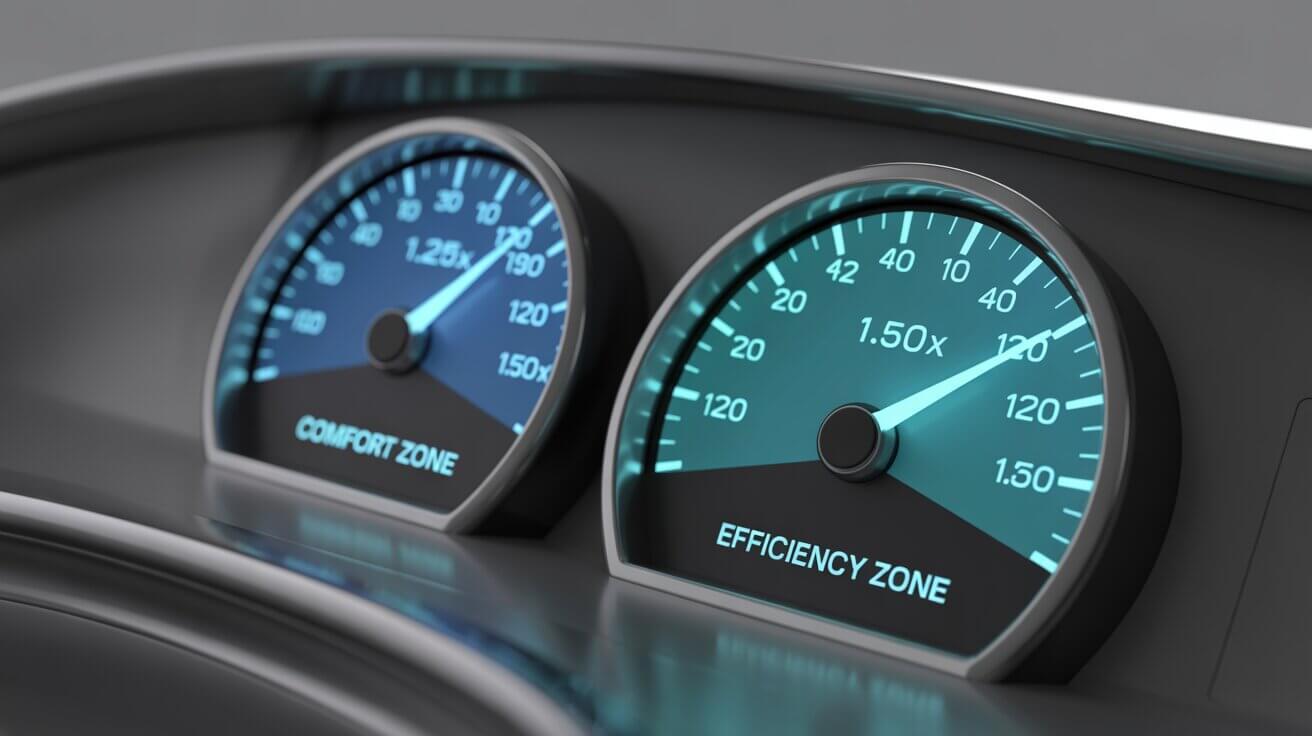
The 1.25x vs 1.5x Showdown: Which Speed is Best for You?
Is the jump to 1.5x worth it? We crunch the math, analyze the audio distortion, and help you find the perfect speed for fiction vs non-fiction.

How to 'Read' 100 Books a Year (Without Sitting Down)
You don't need more time; you need 'NET Time'. My exact daily routine to consume 100+ audiobooks a year while walking the dog, commuting, and doing chores.