How to 'Read' 100 Books a Year (Without Sitting Down)

Key Takeaways
- The Brain Gap: Humans speak at ~150 wpm but think at ~400 wpm. This gap causes distractions.
- The Sweet Spot: Comprehension remains high up to 275 wpm (approx 1.75x speed).
- Silence Removal: Using "Smart Speed" apps is more effective than raw speed increases.
- The Rule: Speed up information (Non-fiction), slow down experience (Fiction).
Table of Contents
When I tell people I read over 100 books a year, they usually assume one of three things:
- I am unemployed.
- I am a hermit with no social life.
- I am lying.
None of these are true. I have a full-time job, a family, friends, and I sleep 8 hours a night.
The secret is not that I have more time than you. The secret is that I have stopped separating "Reading Time" from "Living Time."
Most people try to read by sitting on a couch for 30 minutes before bed. That is a noble goal, but life gets in the way. You get tired. The TV is tempting. You scroll TikTok.
To hit triple digits, you need a paradigm shift. You need to stop reading with your eyes and start reading with your ears during the "Dead Zones" of your day.
This is the concept of N.E.T. Time (No Extra Time). Here is the exact blueprint I use to consume 100+ books a year without sitting down once.
The "100 Book" Math (It's Easier Than You Think)
Let's break down the mountain into molehills. Is 100 books really possible for a normal human?
The average non-fiction audiobook is roughly 10 hours long.
- 100 Books = 1,000 Hours of raw audio.
- But we are Speed Listeners. We listen at 1.5x to 1.75x.
- At 1.5x (with Silence Removal), a 10-hour book takes ~6 hours.
- Total Time Needed: 600 Hours per year.
The Daily Target
600 Hours / 365 Days = 1 hour and 38 minutes per day.
That's it. If you can find 98 minutes in your day, you are a "100 Book/Year" reader. You don't need a PhD; you just need a routine.
The Magic of "N.E.T. Time"
You cannot "find" 98 minutes. You have to "recover" them.
Tony Robbins coined the term N.E.T. (No Extra Time). It refers to time where your body is busy, but your mind is free. These are the Gold Mines of productivity.
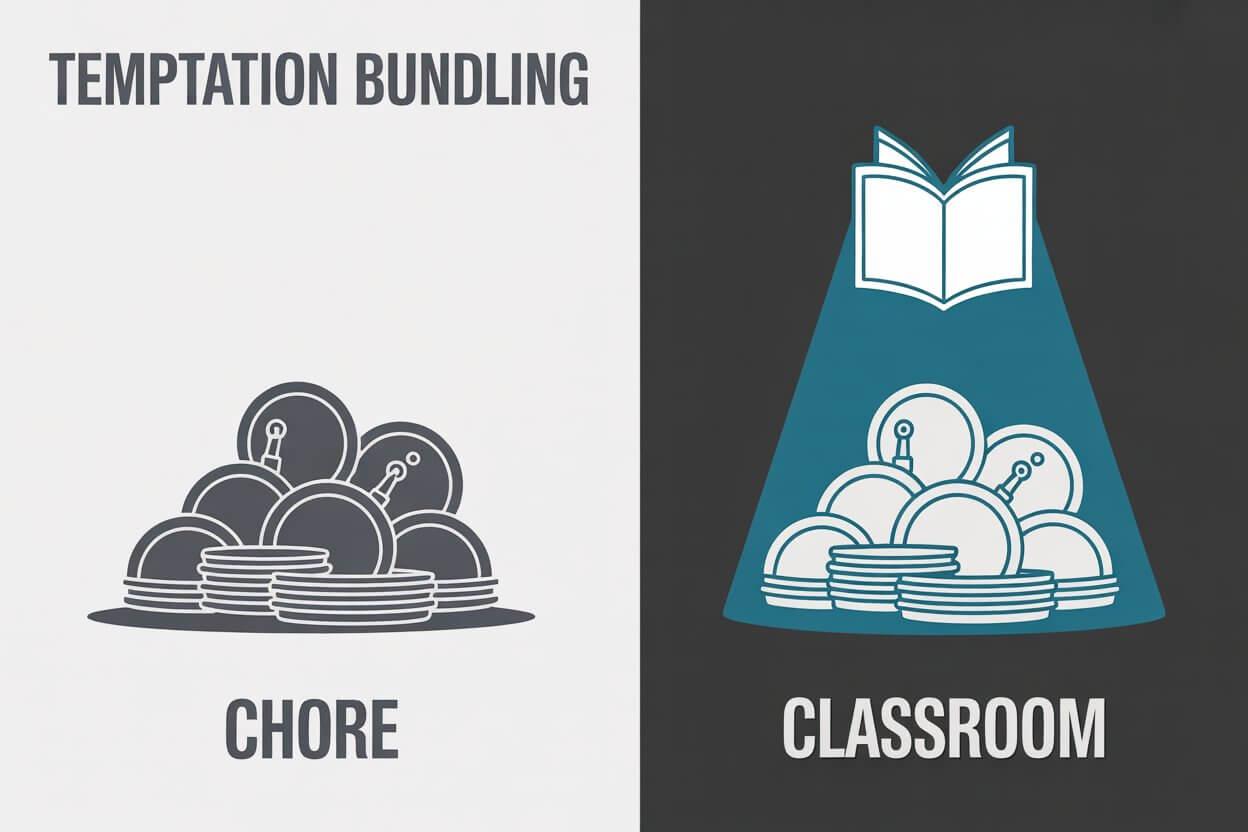
Psychologists call this "Temptation Bundling." You bundle a behavior you want to do (listening to a thriller or a business book) with a behavior you have to do (dishes, commuting).
Suddenly, you stop dreading the dishes. The dishes become the "ticket" to hear the next chapter.
My Daily "100 Book" Routine
Here is exactly how I find those 98 minutes, every single day.
The Dog Walk (Or Commute)
This is my non-negotiable trigger. The moment the leash clicks onto the collar, the headphones go on. I usually listen to dense non-fiction here because my brain is fresh.
The "Chore" Block
Cooking dinner, emptying the dishwasher, folding laundry. This is "Zombie Mode" for the body, but prime time for the ears. I switch to Biographies here—stories are easier to follow while chopping onions.
The "Gap" Time
Walking from the car to the office. Waiting in line at the grocery store. Brushing teeth. These 5-minute micro-sessions add up. Always have your headphones ready.
The exact blocks and speeds I run
| Time | Activity | Speed | Length |
|---|---|---|---|
| 07:00–07:40 | Commute | 1.75x | 40 min |
| 12:30–13:00 | Lunch walk | 2.0x | 30 min |
| 21:30–22:00 | Chores / dishes | 1.5x | 30 min |
Total: 1h40 of listening a day. Across ~340 active days that's roughly 570 hours of real listening — and at these speeds it works out to the 112 books I actually finished this year. No speed-reading course, just the dead time everyone already has.
The Gear: Hardware Matters
You cannot build a habit if your equipment fights you. If your headphones hurt after 20 minutes, you will stop. If your battery dies, you will stop.
After testing dozens of devices, here is the essential Speed Listening loadout.
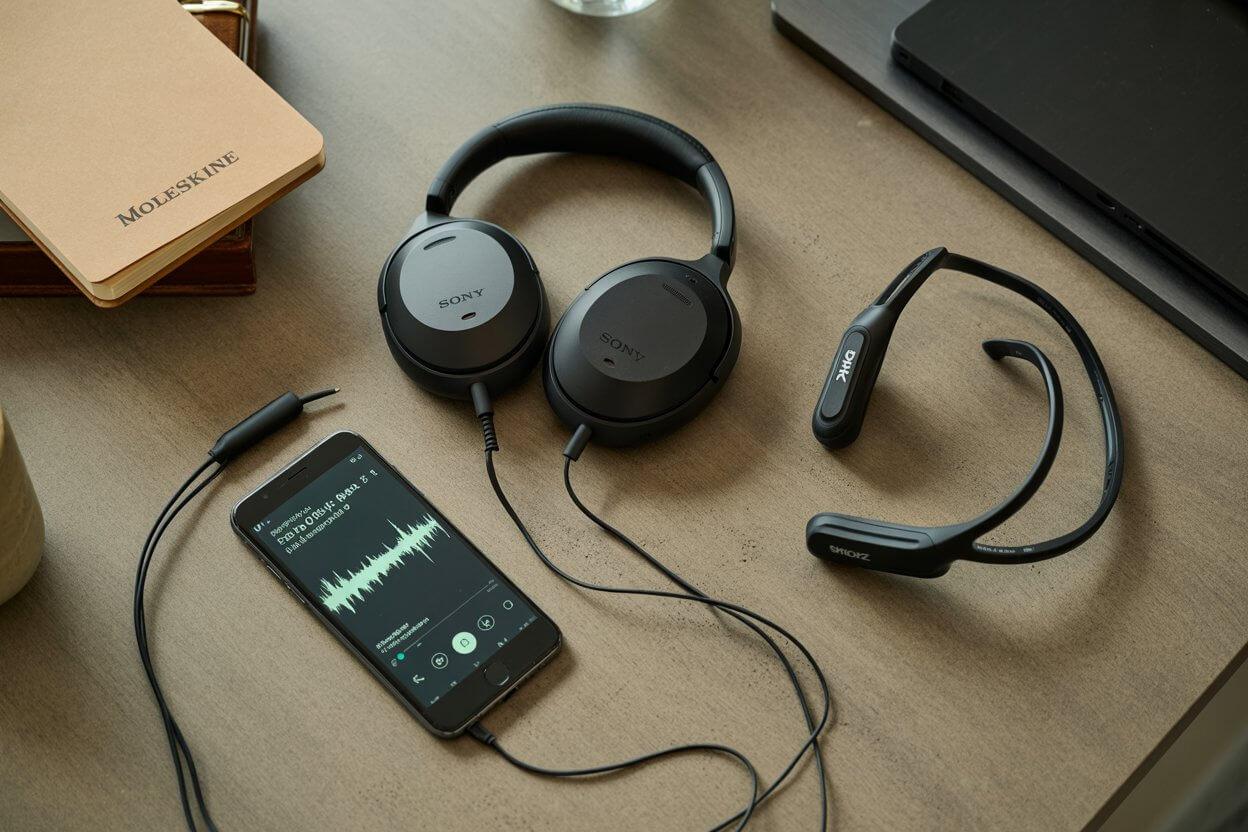
1. For the Commute: Noise Cancelling
Top Pick: Sony WH-1000XM5 or Bose QC45.
When you are on a train or a plane, the background hum fights the narrator's voice. This forces you to lower your listening speed to comprehend. Active Noise Cancellation (ANC) creates a "Studio of Silence" anywhere. It allows you to maintain 2.0x speeds without strain.
2. For the Walk: Bone Conduction
Top Pick: Shokz OpenRun Pro.
This is a safety necessity. If you are walking the dog or running outside, you must hear traffic. Bone conduction headphones sit outside your ear, vibrating your cheekbones. You can hear the book perfectly while still hearing the car coming up behind you. They are game-changers for outdoor routines.
3. The Pocket Essentials
- A MagSafe Battery Pack: Speed listening drains battery (especially with screen-on for notes). Don't let a dead phone kill your streak.
- The "Tap" Configuration: Map your headphone buttons. Single tap = Pause. Double tap = Skip Forward (Ads). Triple Tap = Rewind 15s (The Drift). You should never have to take your phone out of your pocket.
The Social Contract (Don't Be Rude)
Living with headphones on can annoy the people you love. My wife used to hate it. "Are you even listening to me?"
You need a "Social Contract."
Here are my rules for maintaining relationships while hitting 100 books:
- The "One Ear" Rule: When I'm in the house with family, I only wear one earbud. I am technically listening, but I am present enough to hear my name.
- The Immediate Pause: If someone speaks to me, I pause immediately. No "Hang on, let me finish this sentence." Immediate attention shows respect.
- No Audio at Dinner: Meals are for humans, not for books. Period.
Advanced: "Habit Stacking"
James Clear (author of Atomic Habits) talks about "Habit Stacking."
The formula is: "After I [Current Habit], I will [New Habit]."
For us, it looks like this:
- "After I put on my left shoe, I will press Play."
- "After I start the car engine, I will connect Bluetooth."
- "After I turn on the faucet for dishes, I will put in my earbuds."
By tying the audio to a physical trigger, you remove the decision fatigue. You don't "decide" to listen; it just happens automatically.
It's Not About the Number
100 books is a vanity metric. Nobody cares about the number but you.
But the lifestyle of a 100-book reader is transformative. It means you are constantly downloading new ideas, new perspectives, and new stories into your brain.
It turns the boring parts of life—traffic, laundry, waiting rooms—into the most exciting parts of your day. You stop resenting the commute and start looking forward to it.
So, grab your headphones. Your dog is waiting. And so is your next favorite book.
Ready to see the math?
Use the Speed CalculatorRelated Articles
The 7 Best Audiobooks to Start Speed Listening (2026)
Not all audiobooks are created equal. These 7 best-sellers have slow narrators and clear structures, making them perfect for training your ears at 1.75x speed.

Why I Listen at 1.75x Speed (And Why You Should Too)
Why do we listen at 1.0x when our brains process at 400wpm? The honest truth about speed listening, pitch correction, and why 1.75x might be your new normal.
How to Listen to Lectures at 2.0x (And Actually Pass)
University lectures are too slow. Here is the 'Search & Destroy' protocol using Video Speed Controller, Flow-Based Notes, and AI tools to save 90 hours a semester.