Best Headphones for Speed Listening: Bone Conduction vs ANC
Key Takeaways
- The Brain Gap: Humans speak at ~150 wpm but think at ~400 wpm. This gap causes distractions.
- The Sweet Spot: Comprehension remains high up to 275 wpm (approx 1.75x speed).
- Silence Removal: Using "Smart Speed" apps is more effective than raw speed increases.
- The Rule: Speed up information (Non-fiction), slow down experience (Fiction).
Table of Contents
Most headphone reviews are useless for us.
Reviewers talk about "Soundstage," "Thumping Bass," and "Cinematic Immersion." These criteria are fantastic if you are listening to Pink Floyd or watching an Avengers movie.
But if you are listening to a dense biography of Elon Musk at 2.5x speed, "Thumping Bass" is your enemy. Bass muddies the vocals. Immersion puts you to sleep.
As a heavy user who listens for 2+ hours a day, I have tested dozens of headphones. My criteria are radically different from TechRadar or Rtings:
- Consonant Clarity: Can I distinguish a 'P' from a 'B' at 350 words per minute?
- Sibilance Control: Do the 'S' sounds hurt my ears after 60 minutes?
- The "Dishwasher Test": Can I wear them while doing chores without them falling out?
Here is the definitive hardware guide for the Speed Listener.
The Physics of Speed: Why Bass is Bad
To understand why your expensive Beats headphones sound terrible at 2.0x speed, we need to look at the frequency spectrum of the human voice.
Human speech lives mostly between 85 Hz and 255 Hz (Fundamental Frequency), but the clarity—the consonants like T, S, K, and P—lives much higher, between 2,000 Hz and 4,000 Hz.
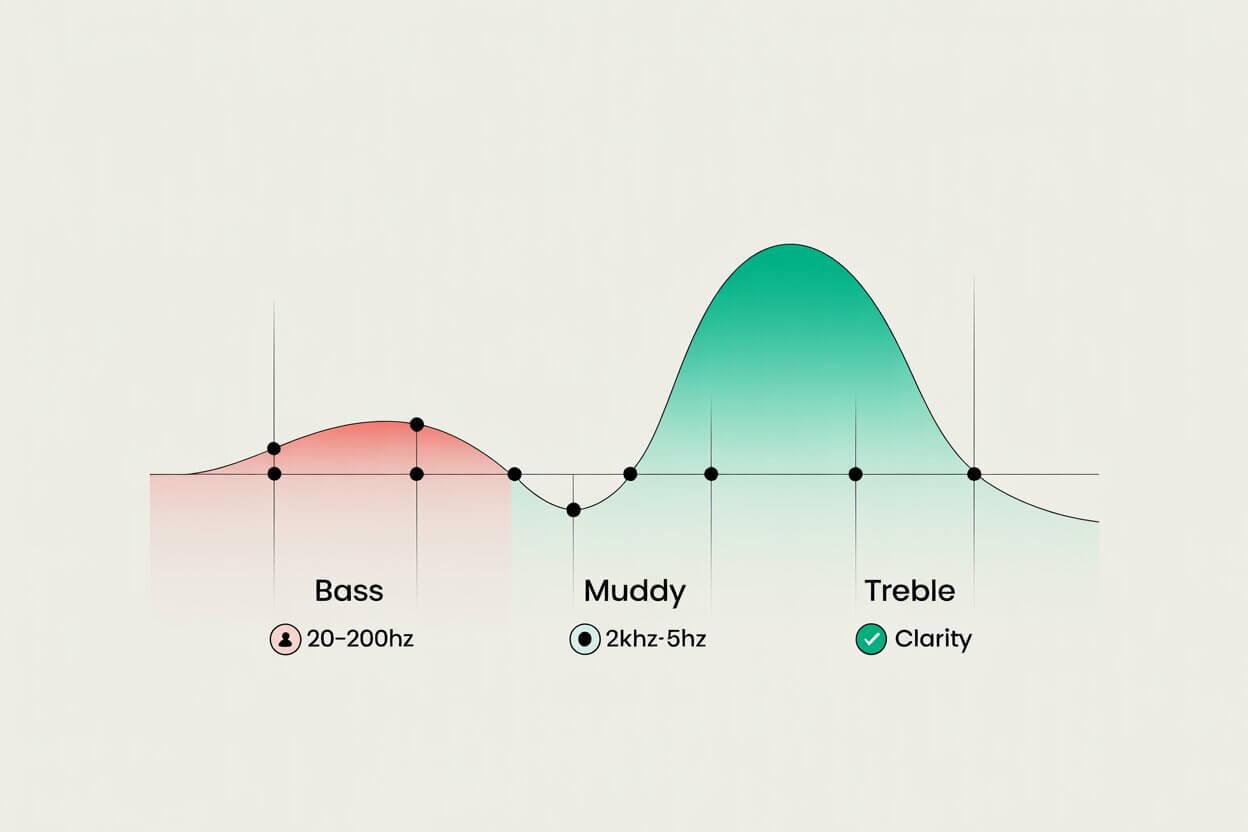
When you speed up audio, the gaps between words disappear. If your headphones have "Boosted Bass" (the V-Shape signature typical of consumer gear), the low frequencies (vowels) bleed into the high frequencies (consonants).
The result is a muddy "wump-wump-wump" sound. Your brain has to work overtime to decode the words, leading to rapid Cognitive Fatigue.
The Golden Rule: For audiobooks, we want a "Bright" or "Mid-Forward" sound signature. We want flat bass.
The Hidden Enemy: Sibilance ("The Ice Pick")
There is a danger in "Bright" headphones, however. It is called Sibilance.
This is the harsh "hissing" sound made by S, T, and Z sounds. At 1.0x speed, it is annoying. At 2.5x speed, it becomes a machine gun of high-frequency spikes drilling into your eardrum.
Cheaper headphones (and some high-end ones like the Sennheiser HD series) often have a "Treble Spike" at 6kHz - 8kHz. This creates the illusion of detail, but for long listening sessions, it is painful.
The Test: Listen to a narrator say "Systems and Statistics". If you wince, those headphones are useless for speed listening.
Category 1: The Commuter (Deep Focus)
Scenario: Subway, Airplane, Open Office.
The Enemy: Background Noise.
If there is ambient noise (engine hum, chatter), your brain has to work twice as hard to separate the narrator's voice from the background. You typically have to drop from 2.0x to 1.25x just to understand.
The Solution: Active Noise Cancellation (ANC).
Top Pick: Sony WH-1000XM5
The king of silence. The ANC on these is so good it feels like entering a vacuum.
- Why it wins: The "Sony Headphones App" has a specific EQ preset called "Speech" or "Bright" that cuts bass and boosts vocals perfectly.
- The Flaw: They get hot on your ears after 2 hours.
- Pro Tip: Disable the "Speak-to-Chat" feature. Otherwise, if you hum along or clear your throat, the book pauses. It is infuriating.
Runner Up: Bose QuietComfort 45
More comfortable than the Sony (deeper ear cups), but the ANC has a slight "hiss" (white noise) that can be distracting during quiet audiobook moments.
Category 2: The Active Listener (Chores & Walking)
Scenario: Walking the dog, washing dishes, running.
The Enemy: The "Occlusion Effect" & Safety.
Have you ever worn silicone earplugs and tried to eat chips? You hear the crunching inside your head. That is the Occlusion Effect.
When you walk with in-ear buds (like AirPods), you hear every footstep as a "thud" in your skull. It is annoying and ruins the immersion. Plus, getting hit by a car because you couldn't hear it is bad for productivity.
The Solution: Bone Conduction.
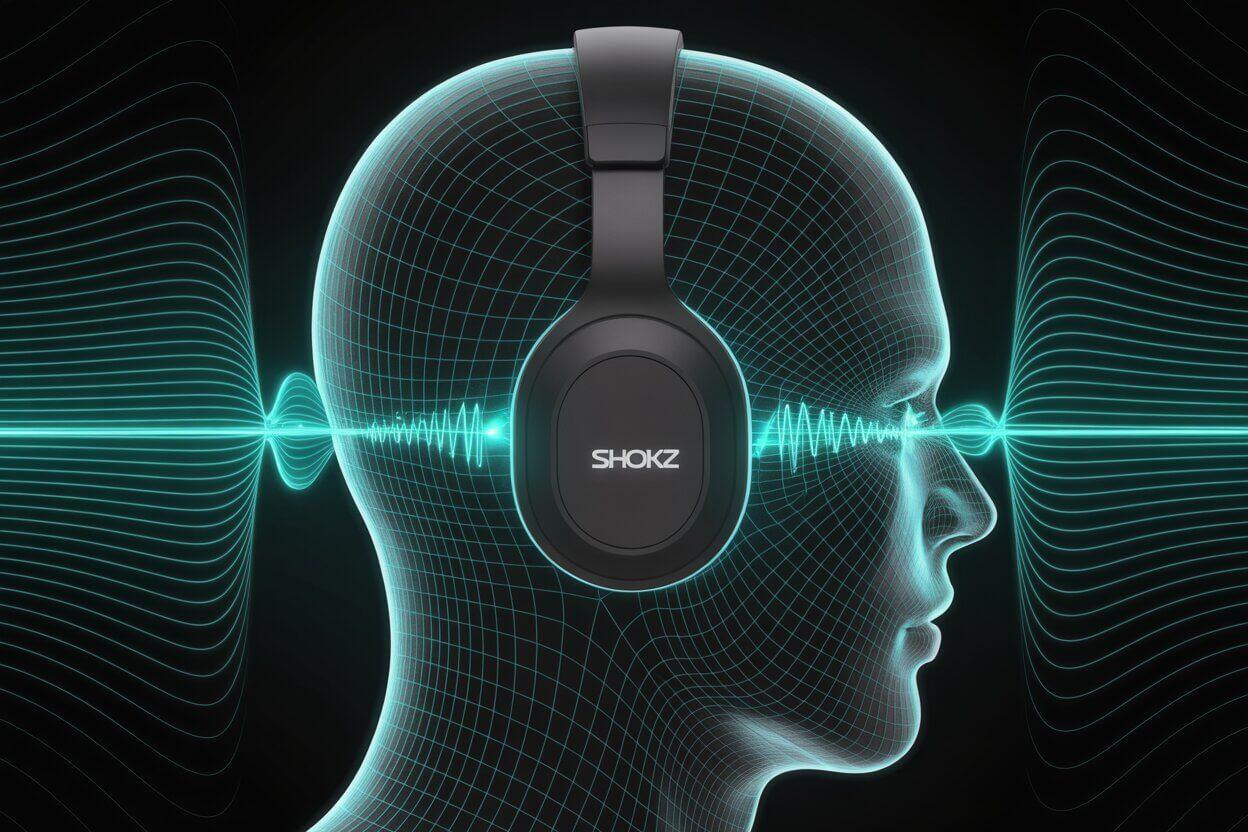
Top Pick: Shokz OpenRun Pro
These do not go in your ears. They sit on your cheekbones.
- Why it wins: Zero ear fatigue. You can wear them for 8 hours. Perfect for "NET Time" (No Extra Time) chores.
- Voice Clarity: Surprisingly excellent for spoken word because they naturally lack bass. They are tuned for human voice frequencies.
- The "Tickle" Issue: At volume levels above 80%, the bass vibrations can "tickle" your cheekbones. It takes a few days to get used to. For audiobooks, this is rarely an issue since we don't need heavy bass.
Category 3: The Budget Picks (Under $50)
You do not need to spend $300 to listen fast. In fact, some cheaper headphones are better because they have weaker bass drivers.
Anker Soundcore Life Q20
Price: ~$50.
It has decent ANC and a "BassUp" button. Turn BassUp OFF. With it off, the vocal clarity rivals headphones three times the price.
Wired EarPods (Apple/USB-C)
Price: ~$19.
Don't laugh. The wired EarPods have a legendary mid-range tuning. They are arguably the clearest vocal headphones ever made. Zero latency, zero battery issues, unlimited listening.
Category 4: The Wired IEMs (For Desk Pros)
If you study at a desk and want absolute perfection for under $25, you need to look at the world of Chifi (Chinese Hi-Fi) IEMs.
In-Ear Monitors (IEMs) are wired earbuds that loop over your ear. They offer better sound quality than $200 Bluetooth buds because they don't have batteries or wireless compression.
The "Speed Reader" Setup (~$35 Total)
- 1.Moondrop Chu II ($19): Metal construction, incredibly clear mids. They sound thin for rap music but perfect for voices.
- 2.Apple USB-C Dongle ($9): This is actually a high-quality DAC (Digital-to-Analog Converter). It drives the IEMs perfectly clean with zero hiss.
The Latency Trap (For Video Lectures)
If you use Video Speed Controller to watch lectures at 2.5x, you might notice a problem: The Lips Don't Match.
Bluetooth has a natural latency (delay) of ~200ms. At 1.0x speed, your brain ignores it. But at 2.5x speed, the visual cues arrive much faster than the audio, creating a "Dubbed Movie" effect that causes headaches.
How to fix it:
- Wired is King: Use the wired cable included with your Sony/Bose, or use wired IEMs. Zero latency.
- "Game Mode": Some earbuds (like Soundcore) have a "Gaming Mode" in the app. Turn this ON. It lowers latency to ~60ms by sacrificing connection range.
- AptX LL: If you are on Android, look for headphones that support the AptX Low Latency codec. Apple users are stuck with AAC (higher latency), making wired connections essential for high-speed video.
Advanced Modding: The $20 Ear Tip Upgrade
If you use in-ear headphones (AirPods Pro, Sony WF-1000XM5), the silicone tips included in the box are likely holding you back.
Silicone creates a good seal, but it can get slippery with sweat, causing the bud to slide out. This breaks the seal, losing bass and clarity instantly.
The Upgrade: Memory Foam Tips.
- Brand to buy: Comply (Series 500) or AZLA SednaEarfit (for sticky silicone).
- The Effect: Foam expands in your ear canal. It creates a "custom mold" fit. This improves Passive Noise Isolation by ~5-10dB, allowing you to lower your volume and save your hearing.
The "Multipoint" Workflow
If you listen on your laptop (lectures) and your phone (audiobooks), you need a feature called Multipoint Bluetooth.
This allows your headphones to be connected to two devices simultaneously. When you pause your lecture on the laptop to get a coffee, you can simply double-tap your headphones to start your audiobook on your phone instantly. No "Disconnecting...", no "Pairing...". It keeps the flow unbroken.
The "Mono-Listening" Protocol
When listening to audiobooks, stereo imaging (Left/Right separation) is irrelevant. The narrator is usually centered.
This opens up a massive battery hack: Mono Mode.
- Hour 0-4: Wear Left Earbud only. Right is charging.
- Hour 4-8: Switch. Wear Right Earbud. Left is charging.
Benefit: You literally double your listening time. Plus, keeping one ear open creates a natural "Transparency Mode" for safety around the house.
Crucial Setting: Go to your phone's Accessibility settings and turn on "Mono Audio". This merges the Left and Right channels so you don't miss any data.
The "Speed EQ" Hack (Wavelet & AutoEQ)
You don't need to buy new gear to get better results. Most headphones have a companion app with an Equalizer (EQ), but those are basic.
If you are on Android, download Wavelet. It is a pro-grade tool.
Here is the exact curve you want to replicate for Speed Listening:
Maintenance: The Secret to Longevity
If your headphones suddenly sound quiet in one ear after 6 months, they aren't broken. They are dirty.
Speed listening often happens during "Active Time" (cleaning, walking), which means sweat and wax. Earwax blocks the high frequencies (clarity) first.
The Protocol:
- In-Ears (AirPods): Use a tiny amount of Blu-Tack (poster putty). Press it into the grille and pull it out quickly. It grabs the wax without pushing it in. Do this weekly.
- Over-Ears (Sony): Wipe the pads with a damp cloth (water only, no alcohol) after every sweaty session. Alcohol destroys the protein leather.
Final Verdict
If I could only keep one, I would keep the Shokz OpenRun Pro.
Why? Because the biggest barrier to reading 100 books a year isn't "Audio Fidelity"; it's opportunity.
The Shokz are the only headphones I can wear for 4 hours while cooking, cleaning, and walking the dog without my ears sweating or hurting. They enable the "NET Time" lifestyle better than any Noise Cancelling headphone ever could.
But if you are on a train every morning? Get the Sony XM5s. Your brain will thank you.
Got the gear? Now optimize the software.
See Best Speed AppsRelated Articles
The 5 Best Audiobook Apps for Speed Listening (2026)
Stop using the default player. Discover apps with 'Smart Speed' and 'Silence Removal' that let you listen faster without the chipmunk effect.
Audible vs. Overcast: Why I Cancelled My Subscription
Audible is the giant, but for Speed Listeners, it's a bottleneck. Here is why I switched to Overcast + Libro.fm and how it saves me 45 minutes per book.
The Audiobook Speed Cheat Sheet: How Long Will It Take? (Charts)
Quick reference tables for 1.25x, 1.5x, and 2.0x speeds. See exactly how much time you save on 8h, 10h, and 12h audiobooks.